Talking About Privilege and Advantage
At the end of my post about the Ruby Sales question “where does it hurt” I mentioned that in order to make any progress we need to acknowledge and examine where we are as a society. To do that fully requires looking at complex systems with problems that are difficult to disentangle, and can be overwhelming. If we are zoomed out too far, while trying to solve the problems of humanity we often forget about the whole point; that there are individual people, human beings within the humanity. It can become a case of losing the trees for the forest. If the goal is to make society better for everyone we have to acknowledge the ways that we are the same and the ways that we are different, and use them to come together. The problem is that these ways are often used to divide us more than anything.
I think a key way into this might seem unlikely at first, especially given that it is a concept that is typically a flashpoint these days; privilege. The simple mention of the word is enough to cause hackles to raise and schpinters to clench. But it is actually perfect to illustrate my point, because it is a concept that has taken on a meaning that is actually the opposite of useful because we have been made to think about it completely wrong.
Even outside of our current social climate, the word privilege is perhaps the wrong one to use. As Stephen J. Aguilar argues, the term is “too generic and abstract.” He continues, stating that it “is a sterile word that does not grapple with the core of the problem. If you are white, you do not have ‘white’ privilege. If you are male, you do not have ‘male’ privilege. If you are straight, you do not have ‘straight’ privilege. What you have is advantage.” Advantage is a much better word to bring into these discussions. Most people understand the idea of having an advantage, and also understand that an advantage in one area, does not necessarily grant an advantage in another. Height might give you an advantage in basketball, but can give you a disadvantage in comfort while flying (I speak from experience). This is expressed perfectly by Aguilar. “Advantage can be summed up in a way that can generate a net advantage or disadvantage in certain spaces.” Those last three words are the most important; “in certain spaces.”
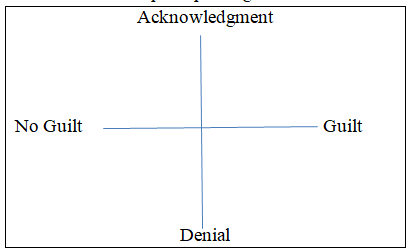
When talking in terms of privilege the reactions to the very idea always remind me of the quadrant scale that defines political discourse; a so-called political compass that has a vertical social scale from authoritarian to libertarian, and a horizontal economic scale from left to right. In the case of privilege I see the vertical scale of its actual impact on society, ranging from an acknowledgement of it having an effect and denial of it doing anything. Then the horizontal scale is how we feel about how it affects us, ranging from feeling guilt about privilege to no guilt at all. Reframing discussions to advantage essentially eliminates this quadrant structure, because very few people will deny that there are no advantages that people can have. That takes out the vertical axis. It also eliminates the horizontal because guilt has no real place in the paradigm. Advantages are not often viewed with the same scope as privilege.
Arguably the word most connected to privilege is “white,” followed closely by “male.” Taking the idea of white privilege first, one argument you often hear is something along the lines of “well I’m poor, I don’t have white privilege.” This exposes the main issue with the word privilege itself. It has taken on an all encompassing role for many people, in a way that doesn’t allow for the multifaceted aspects of identity most people have. With this meaning it implies that a person is set for life in all areas if they have any sort of privilege at all, which is just not the case. The privileges related to race and to economic status are different, so it is possible to have one without the other. The issue is seeing this, especially as groups become more insular. The advantage reframe helps so much.
If we bring it back to my Spheres of Influence, we can make some connections. When we are discussing advantage, we are dealing with the Identity and Community layers for the most part. The more homogenous the outer layers are (Inner Circle, Outer Circle, Community), the less important those same aspects of the Identity layer will be. So if a white person is completely surrounded by other white people, their white identity layer is not seen as much because it blends into the world around them. This can change the structures of their advantages. To put it in the privilege terms, their white privilege doesn’t exist in this instance. It will exist if they venture outside of the current Community Layers, but they won’t be able to see that unless it happens. They are essentially playing a game in an arena full of other white people who have the same particular advantage. It’s like playing baseball against a team with the same set of skills, which means the playing field is level. But you take some of those people to a different arena where the game is football and give them no other equipment or explanation of the rules, and have them playing against a team skilled at that game, they will be at a disadvantage now. The issue is that so many people, through no fault of their own, are only ever able to experience life in their arena, which makes it hard to understand how life is in others.
This is also a good time to mention that an advantage is no guarantee of anything. Being tall may be an advantage in basketball, but it doesn’t mean you can’t get beat by someone shorter who is more skillful. Being white brings a lot of advantages in various areas, but it doesn’t mean that you are automatically doing better than all people of color. This goes back to the net advantage/disadvantage. Take two people – one white from a low income family, the other black from a well off family. These two people’s race and socioeconomic status will come into play in different ways in different situations. The black person is more likely to get stopped by law enforcement, but is more likely to get a good education because of their socioeconomic status. The white person is less likely to travel much outside of their community, but is also less likely to be denied employment opportunities based solely on their race. Advantage allows us to talk better about the intersectionality of our various identities. It also allows for the nuances created in the distinction I make between the Community and Identity layers and how they can or cannot change. This is reinforced by our example; the racial component won’t change, the white person will always have that advantage. But the socioeconomic advantage can change. The white person could gain a significant amount of wealth and/or the black person could lose all of theirs.
In order for us to begin to notice advantages in the world we have to examine our own, by “enumerating one’s advantages and understanding their origins” to quote Aguilar again. This allows us a way into empathy because we can begin to connect to aspects of our lives and see how they are similar to the people around us. The way we discuss “privilege” does not allow for these nuances, instead forcing blanket generalizations on people.
These generalizations are incredibly dangerous. They lead to the easiest tools of division and authoritarianism by allowing us to dehumanize entire groups of people simply because they are different than us. Grouping everything under the umbrella of one type of privilege erases any acknowledgement of the actual pain and consequences of disadvantage. This is how you see so many people vote against their own interests; they have been led to believe that the disadvantages in their lives are a result of the privileges of other people. This is also where politicians on all sides of the spectrum fail their constituents, by failing to acknowledge the multifaceted disadvantages they face and work toward a solution. If we all could focus on the net outcome of our individual and collective advantages and disadvantages the world could be so much better. To do that though, we have to get away from the narratives that have been attached to the word privilege. If we can see each other as human beings that contain multitudes, including the varied advantages and disadvantages we all have, we could find more common ground and work toward building systems that help support everyone.
Sources
Aguilar, S. J. (2016, November 14). Why it’s better to talk about “advantage” rather than “privilege” [Opinion essay]. Inside Higher Ed. https://www.insidehighered.com/views/2016/11/15/why-its-better-talk-about-advantage-rather-privilege-essay